Reflections from the FAO One Health Conference: Why working animals must not be left behind
 By Sam Whyte
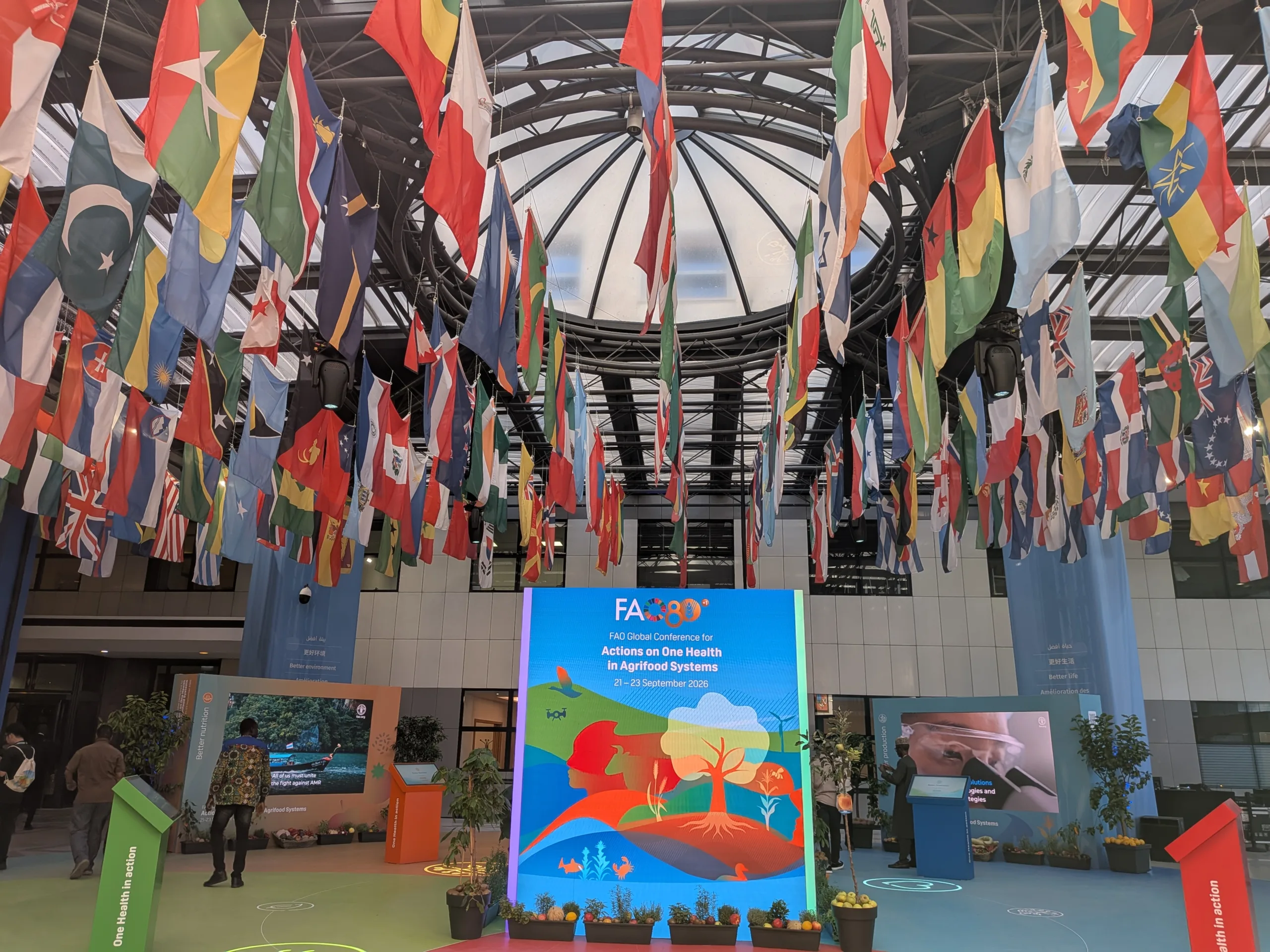
Earlier this month, Working Animals International participated in the FAO One Health Conference 2026 in Rome, joining government ministers, international agencies, researchers, civil society organisations and practitioners.
Across discussion about some of the most pressing challenges in agrifood systems, a clear message emerged: preventing disease, strengthening resilience, protecting ecosystems and supporting livelihoods all depend on stronger, more integrated systems that recognise the connections between people, animals and the environment.
For those of us working to improve the lives of working animals, the conference offered both encouragement and challenge.
One Health is becoming a mainstream policy agenda
From statements by government Ministers through to technical debates on climate resilience, antimicrobial resistance (AMR), disease surveillance and food systems, speakers highlighted the growing recognition that animal health, human wellbeing and environmental sustainability cannot be addressed in isolation.
Investments in prevention, preparedness and resilient systems were repeatedly identified as essential for future food security and community resilience.
Animal welfare should be seen as an investment, not a cost
One of the most encouraging debates came during a side event hosted by our partners at the World Federation for Animals. Here, animal welfare was explored not simply as a byproduct of a One Health approach, but as something that can actively contribute to its goals in agrifood systems.
Researchers and policymakers shared growing evidence of improved animal welfare contributing to better animal health, reduced disease pressures, lower antimicrobial use, improved productivity and stronger livelihoods. The FAO highlighted its One Health framework as a useful tool for governments in planning policies and interventions, and the World Organisation for Animal Health linked direct investment in animal welfare to better animal health, food security, economic resilience, and public trust in agrifood systems.
A missing voice: Working animals
While the welfare of working animals was a welcome consideration in discussions about supporting pastoralist communities, plastic pollution and emergency responses, they remained largely absent from the broader policy conversation.
Healthy working animals support livelihoods, food production, transport and access to services. They help communities adapt to climate pressures. They depend on accessible veterinary services and effective disease surveillance systems. They are directly affected by environmental degradation and pollution, including plastic waste.
Yet they often fall into the gaps between traditional policy and financing structures, with their welfare receiving less attention than production animals in government efforts to strengthen wider agrifood systems.
The One Health agenda offers a welcome opportunity to redress this balance.
Working animals are not a niche concern separate from the systems One Health seeks to strengthen; they are part of those systems. Their health and welfare are connected to resilient livelihoods, functioning animal health systems, healthy environments and more equitable rural development.
By demonstrating the role working animals already play in supporting livelihoods, food systems and community resilience, we can make a stronger case for their welfare to be considered within the policy priorities governments are already working to address.
That means ensuring working animals are better recognised in the evidence and data that inform decision-making and included in policies and plans to strengthen animal health systems, build climate resilience and support sustainable development.
Because working animals deserve a place in that conversation.


