Photo series from the Pushkar Camel Fair highlights the importance of camel welfare
 By Ally McLaren
20 November 2026:
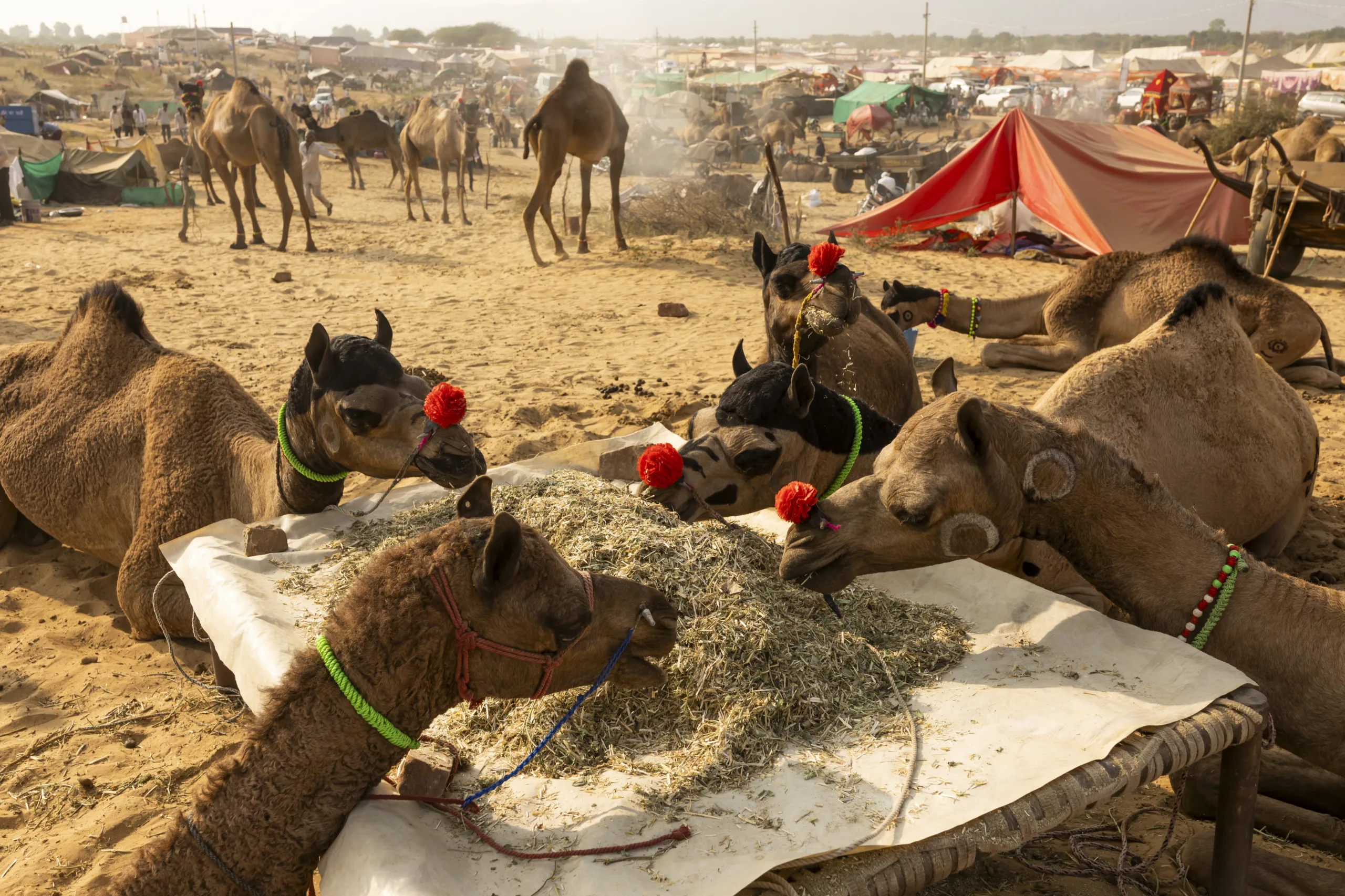
The striking images capture the scale and colour of the fair, where owners adorn their camels with vibrant tassels and bells. The event attracts visitors from across India and around the world.
In Rajasthan, particularly in desert communities, camels play an important role in daily life, supporting livelihoods through transport and farming.
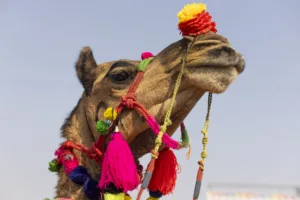
Animal welfare charity Working Animals International’s local partner, Help in Suffering (HIS), has run a mobile clinic at the event since 2004, treating camels with conditions such as harness wounds, nose peg injuries, lameness and skin diseases, that might otherwise go untreated.
The team also works directly with owners, sharing knowledge on the correct fitting of harnesses to help prevent injuries and encouraging the use of safer plastic nose pegs instead of traditional wooden ones, which can splinter. Reflective materials are distributed to improve visibility at night, reducing the risk of road traffic accidents.
Dr Swami Abhinav, Head of the camel welfare project for Help in Suffering, said:
“It’s incredibly rewarding to see the difference these mobile clinics make.
They bring essential veterinary care directly to camel-owning communities that often have limited access to such services. By providing timely treatment, preventive healthcare and practical guidance to owners, we help alleviate animal suffering, prevent health problems from becoming more serious, and improve the overall health and well-being of working camels. We see first-hand that the impact goes beyond the animals treated, as the knowledge shared with owners helps create lasting improvements in how camels are cared for.”
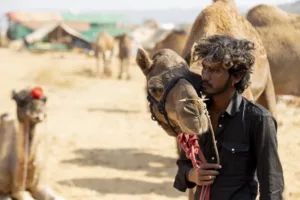
Sonu, a camel owner pictured above said:
“I am really grateful for the vets’ support in getting my animals treated. The services are free, which means there is more money for my family, and they always treat the animals with kindness.”
Working Animals International has partnered with HIS since 2005 to improve the welfare of working camels across Rajasthan, reaching animals in rural villages, brick kilns, and fairs.
James Harcourt, Chief Executive at Working Animals International, adds:
“The mobile clinic at the Pushkar Camel Fair is a powerful example of how our partners bring veterinary care and welfare advice directly to working animals and their owners. Around the world, our partners operate mobile clinics to reach working animals in remote communities, providing essential support to those who might otherwise have little or no access to these services.”
For over a century, Working Animals International has been dedicated to transforming the lives of working animals and supporting the people who depend on them. We work with partners worldwide to increase access to essential veterinary care and campaign for better welfare standards. We support owners as they develop the knowledge and skills to look after their animals with confidence and care – while inspiring the next generation to do the same. Together, we’re building a world where working animals are healthy and valued, communities are stronger and livelihoods are more secure.
ENDS
Contact the team for images and b-roll.
Notes to Editors
Media contact
Ally McLaren, Communications and Media Officer, Ally.McLaren@workinganimals.org / +44 (0)20 7831 3999
Ruby Wright Barnes, Head of Communications and Campaigns, Working Animals International, Ruby.WrightBarnes@workinganimals.org / Tel: +44 (0)20 7831 3999
