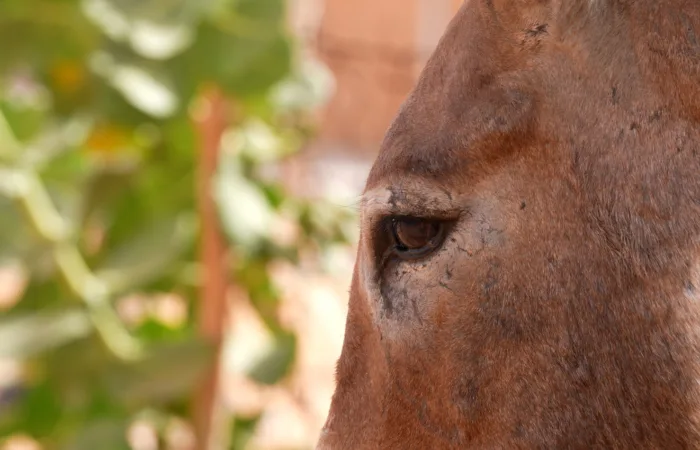
A day through the eyes of a water donkey in Mauritania
 By Ally McLaren
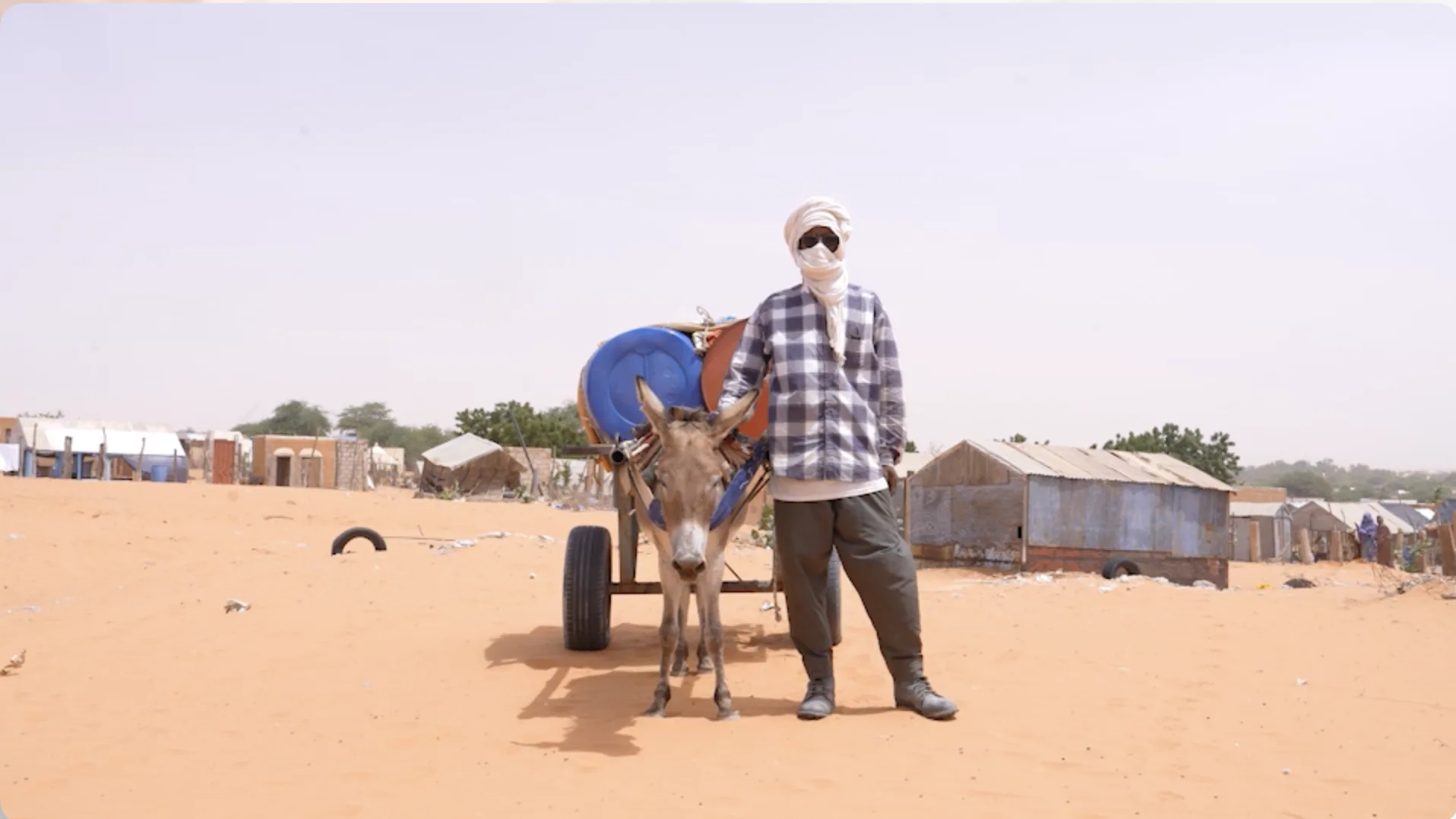
Ahmedou lives on the outskirts of Nouakchott, Mauritania. A married father of four, he relies on his donkey, Lagdaf, to earn a living transporting water across the city. This Working Animal Day, we are sharing the world through the eyes of working animals like Lagdaf, highlighting the challenges he faces as he carries out his role each day.
Lagdaf’s owner, Ahmedou, shares what the typical day of a water donkey looks like, the challenges they face and the importance of working animals in his community.
Tell us about yourself and your family.
My name is Ahmedou. I’m 45 years old and I have four children. They all depend on what I earn with my donkey, Lagdaf. I’ve been working with Lagdaf for almost 12 years. Before I had him, I was struggling. With his help, I can now meet my needs. He is irreplaceable.
What does a typical working day look like for you and Lagdaf?
For the past six years, Lagdaf has been carrying water for me to deliver. We work in difficult conditions, in an area full of dunes. I set out at six in the morning and come home around six in the evening. That’s the usual routine. But when water is unavailable and there is a long queue, I start at 5:30am and finish at ten at night. The long queue delays my deliveries. Sometimes there are 150 donkeys in the queue.
I rely on this work. I have no alternative. I work with him and feed my family with what I earn.
What challenges do you and Lagdaf face?
This work is very tiring. There are no clear roads for us, it’s all informal settlements and the roads are in poor condition. We face many challenges, including tire problems. The heat is intense. We only get some relief at night. The heat is very hard on my donkey; he sweats profusely and loses a lot of fluid. He works very hard. He suffers just as a human being would. Humans and donkeys endure the same heat and strain.
Do you think working donkeys are valued by society?
There are only three water stations in this area, and things become difficult when the heat intensifies. Here, and in many parts of Nouakchott, water is supplied solely by donkey-drawn carts. Many people depend on donkeys for their livelihood and water. Yet they aren’t given the respect they deserve.
How does the veterinary team at the mobile clinic help you?
They did everything they could for me. They treated my donkeys. One had back pain, and the other had severe wounds. They worked carefully and took their time, providing every treatment they could. I’m grateful to them. They came to the water pump in this extreme heat and treated all the donkeys. We sincerely thank them.
Working animals such as donkeys, horses, camels and oxen support the livelihoods of millions of people, yet they are too often overlooked. By seeing the world through their eyes, we can better understand the challenges they face every day and why their welfare matters. With your support, we can continue to provide essential veterinary treatment to working animals just like Lagdaf, ensuring better livelihoods for animals and the communities who depend on them.